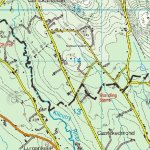
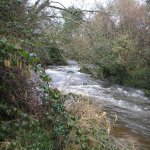
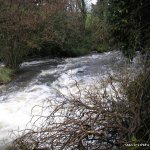
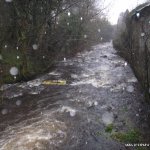
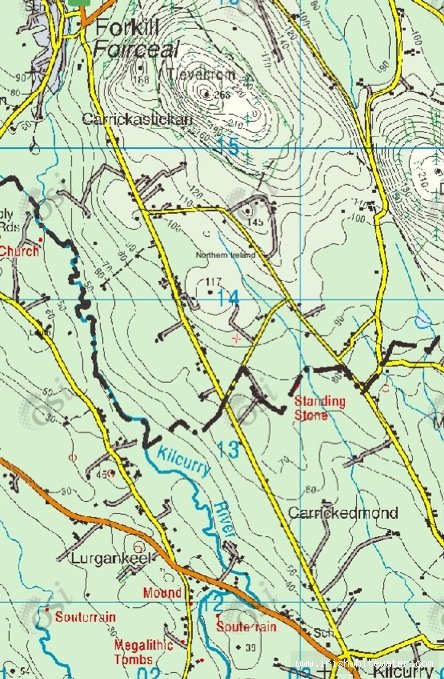
At the put in the river is narrow and begins to pick up speed as it heads towards an old mill. At the mill the water constricts into a man made channel and then opens out into the start of the first white water section (Begley's Blast). At medium levels the rocks are only covered and can give an unpleasant surprise to the unsuspecting paddler. At higher levels the water is big and bouncy and fast for this 100 metre section (2/3).The river then slows down as it turns a corner before picking up to offer a few more smaller rapids(2).
Then the river loses much of its energy and narrows (1/2) as it crosses the border into Co. Louth. Watch out for a few low footbridges which can be limboed under with some care. About a mile further on at a sharp S bend in the river the next white water section begins. This is the best section of the run. The rapids are continuous for about 200 - 300 metres and include a few small drops.The biggest drop is about a 2 metre fall and is on river right over half way through this white water section. It's not difficult but is not very deep at the bottom so a boof stroke may save some plastic! There is a small stopper at the bottom that would merit some respect in very high water levels. After this section the river narrows and meanders to the finish point at a large stone bridge in a place called Kilcurry.
Note: The river does offer a few more white water sections and can be paddled into Dundalk to a section called Toberona - but the there are many trees blocking this section and at present it is not advised.
No gauge is linked to this guide yet.
If paddlers check a gauge before running it, you can help. Suggest the gauge, and the levels it needs if you know them. Once an admin approves it, this guide shows the live level, a level history and how the river usually rises and falls through the year.
Suggest a gauge for this guideWritten by paddlers. If you know this river, sign in and edit these notes. Changes are reviewed before they appear.
At the put in look up stream about fifty feet on the right. There is a big bolder a few feet from the bank. This needs to be well covered to make the river runnable. If it's not even visible and the water is going out into the field then it is very high and will be a fast and possibly 3 and because of the features on the river it will demand due respect. The Forkhill river rises fast after heavy rain but it also drops within a few hours after rains.
Interactive map loading...
Forkhill
Seanie